1 in 5 of your employees is a family caregiver. Most of them haven’t told you.
They’re leaving early for their mom’s appointment. Coming in late after their dad’s follow-up. Taking calls in the hallway about test results they don’t understand. It’s called invisible overtime — and it’s costing you more than you think.
The invisible overtime crisis
According to research from the Rosalynn Carter Institute for Caregivers, an estimated 53 million American adults are providing unpaid care to a loved one — and 61% of them are employed. These caregiver employees are spending an average of 20 hours per week on caregiving responsibilities on top of their jobs.
The workplace impact is staggering:
of caregiver employees had to start work late or leave early because of caregiving responsibilities
have voluntarily left a job at some point because of caregiving demands
in lost productivity per caregiver employee due to presenteeism alone
report that caregiving prevents them from performing at their highest level at work
Source: “Invisible Overtime: What Employers Need to Know About Caregivers,” Rosalynn Carter Institute for Caregivers, January 2022.
They don’t need to be in the room. They just need to know what happened.
A huge part of the caregiver burden at work isn’t the appointment itself — it’s the anxiety of not knowing what the doctor said. Your employee’s mother goes to a cardiology follow-up while they’re at work. They spend the rest of the day distracted, waiting for a callback, trying to piece together what happened from a two-sentence text.
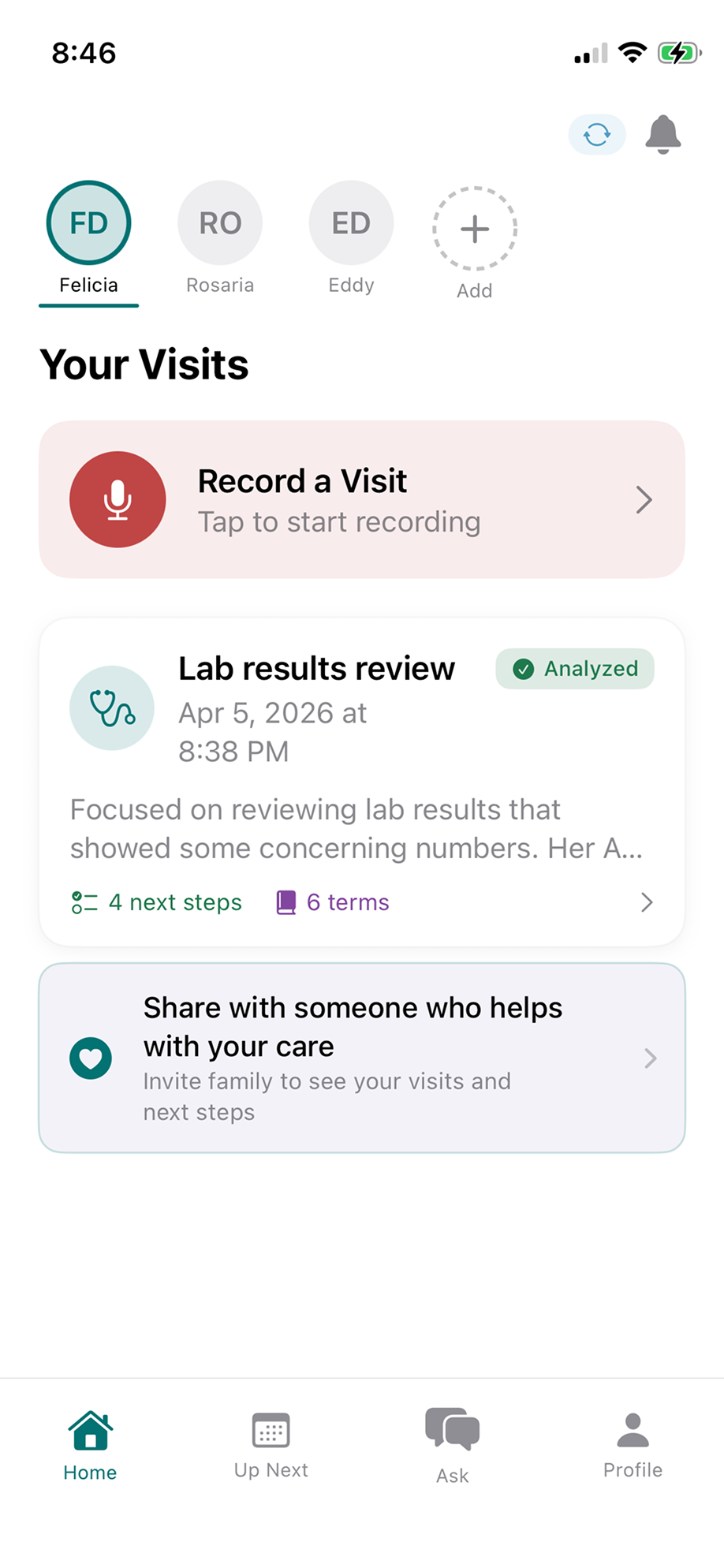
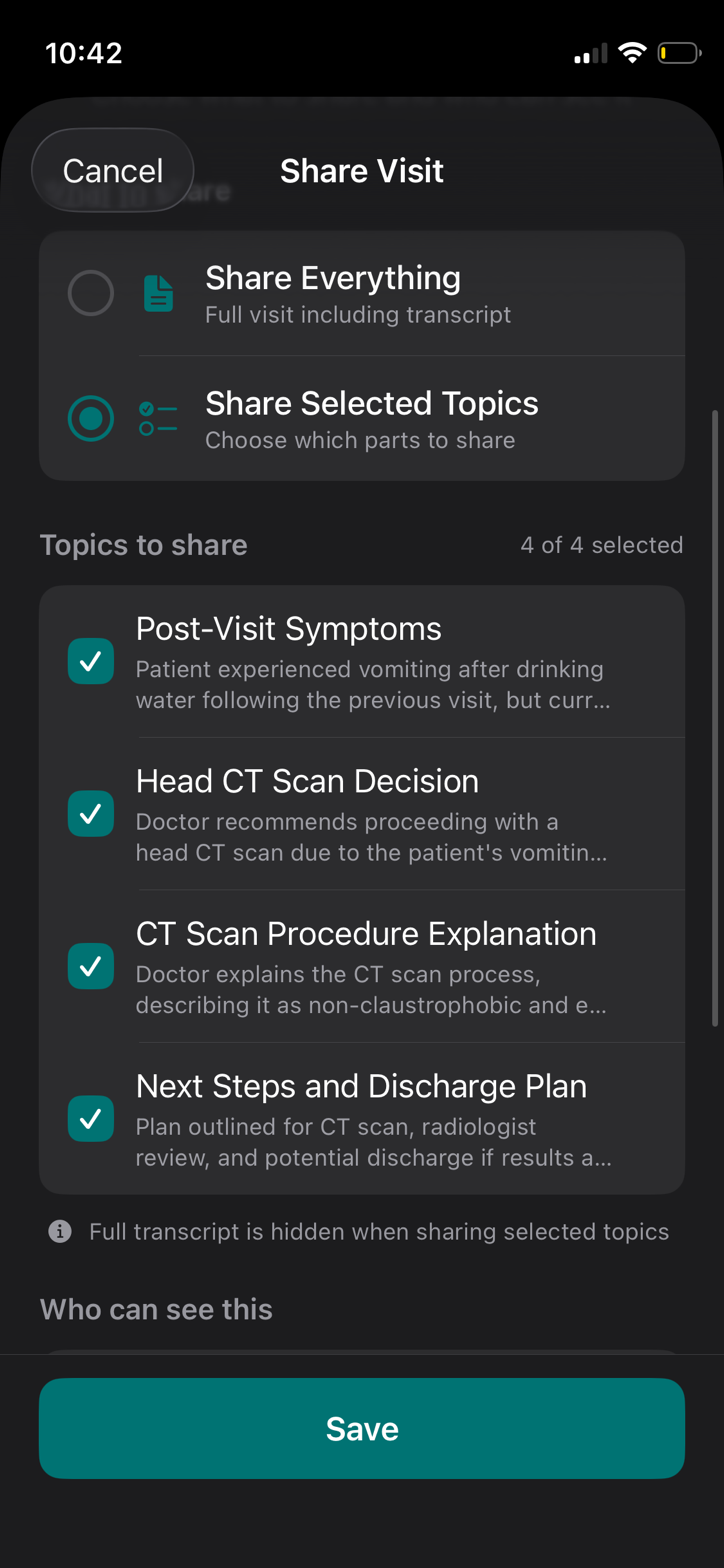
VisitRecall changes that. The loved one records their visit and shares a clear, complete summary with the family — every term explained, every next step outlined. Your employee stays at their desk, stays focused, and stays informed. No more leaving early. No more anxious hallway calls. No more “I need to take my mom to the doctor” when what they really need is just to know what the doctor said.
For self-funded employers: better outcomes on your plan
VisitRecall doesn’t just support your employees as caregivers — it supports them as health plan members too. When members understand their care, they follow through.
Health literacy drives adherence
Members who understand their diagnosis, medications, and next steps are more likely to follow through — reducing avoidable utilization on your plan.
Follow-ups actually happen
VisitRecall’s Up Next feature turns provider recommendations into a clear action plan — screenings get scheduled, referrals get completed, gaps close.
Families stay in the loop
When the employee’s aging parent shares their visit summary, the whole family can coordinate care — reducing duplicative visits and keeping members in their communities longer.
A benefit that actually gets used
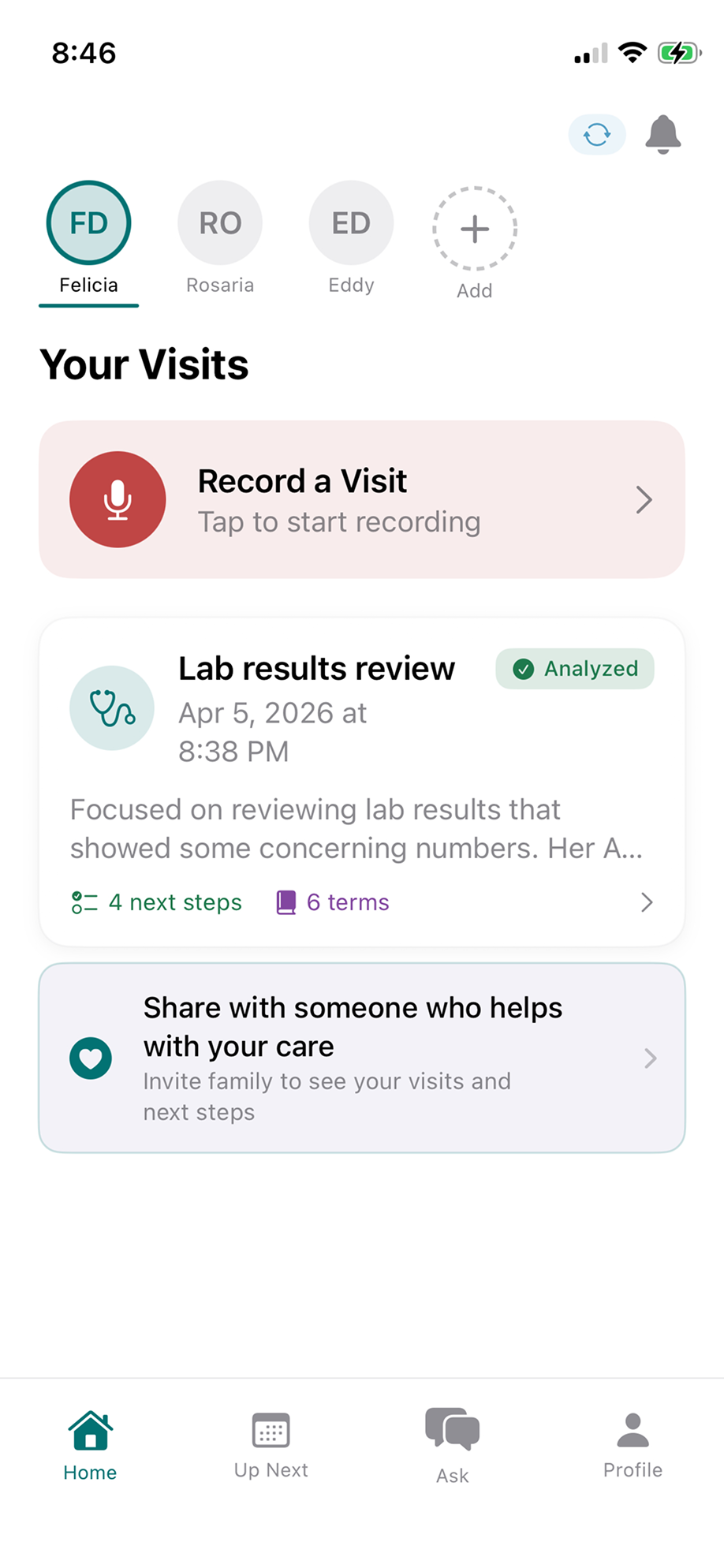
Most employee health benefits go unused because they’re complicated, clinical, or disconnected from how people actually manage their health. VisitRecall is different — it meets people at the moment they need it most: right after a doctor’s visit, when they’re overwhelmed and trying to remember what just happened.
There’s no onboarding, no training, no integration with your systems. Employees and their families download the app, use it at their next appointment, and immediately see the value. It’s the kind of benefit that makes employees say “My company actually gave me something useful.”
Support your caregiving employees without adding to their workload.
We’d love to show you how VisitRecall reduces invisible overtime and improves outcomes on your plan.
Get in Touch